Advancing healthcare through evidence, innovation, and systems transformation

In Practice
Activating Health: Building Resilience Through Behavior
Health resilience is shaped by behavior. A growing body of evidence demonstrates that patient empowerment—defined across the pillars of resources, agency, and context—is one of the most powerful levers available to health systems seeking to shift from reactive to proactive care.
Patients who are activated—those with the knowledge, skills, and confidence to manage their health—consistently demonstrate better adherence, lower utilization of acute services, and improved long-term outcomes. Self-efficacy, or the belief in one’s ability to sustain health behaviors, remains the most reliable predictor of both adoption and long-term maintenance.
Healthcare reimagined is not a system that treats sick people more efficiently. It is proactive and multifaceted—designed to support, incentivize, and celebrate individuals who actively engage in their own health, equipped with the tools, data, and behavioral scaffolding needed to sustain that engagement over time.
This approach translates into three core areas of focus:
1. Building Positive Health Habits
Developed community-based programs that integrate large-scale data insights with behavioral economics models—helping individuals make informed choices and establish sustainable health habits.
2. Celebrating “Small Wins”
Designed adaptable models that connect personal health data to behaviors individuals are already motivated to adopt—creating reinforcing feedback loops and mastery experiences that sustain engagement over time.
3. Improving Health Resilience
Implemented evidence-aligned approaches that integrate mental, physical, emotional, and social dimensions—enhancing individuals’ ability to withstand, adapt to, and learn from health challenges and disruptions.
Building Skills for Sustainable Health at Home
Through needs prioritization, task-specific practice, repeated exposure, and positive reinforcement, clinicians help patients and caregivers build the skills needed to sustain consistent, efficient, and adaptable health behaviors—both between skilled visits and after discharge.
The Specialty Continuum

Seamlessly interfaced across departments that spanned research and clinical development, learning/ professional development, clinical operations, marketing, sales and national accounts to develop and deploy community health outreach and specialty continuum of Home Health skilled-care programs. More than 1 million homebound older adults have benefited from Safe Strides®, a specialized fall-risk reduction program.

Ask for the password to view video
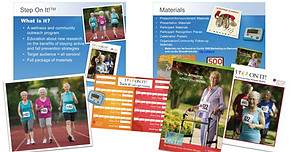

Step On It! Senior Wellness Program
Gentiva developed, deployed and represented Step On It℠, a community outreach program designed to help older adults be more active, independent and engaged. Designed specifically for the older adult demographic, education focused on benefits of movement and proactive health prevention, common-sense medication mastery, home safety and fall risk reduction.
Complimented by community press releases and TV adds, presentation venues have included but not been limited to community centers, senior centers, assisted living facilities and churches.
Older adults from all walks of life have attended KAH's Step On It℠ presentations. Participants raved about how much they enjoyed the program’s use of positive recognition as well as benefits specific to improved movement confidence and sense of well-being.


EMPOWER: Community Outreach Program
Health behaviors are skills that can be acquired and improved. The EMPOWER continuum spanned from community outreach to a specialized, Home Health skilled intervention program.
As an intervention model, EMPOWER helped Kindred at Home clinicians categorize and prioritize patient needs. Different than intervention pathways & protocols, EMPOWER structured clinical interventions across 5 progressive levels of patient skill-acquisition that helped patients optimize key health behaviors that spanned across condition management domains, such as awareness (self-monitoring) medication scheduling and adherence, nutrition, functional mobility, and risk reduction.